Protea Flowers: Meaning and Care
With their bold shapes and striking colours, proteas are some of the most eye-catching flowers you can buy. They look almost prehistoric, and they bring instant drama to any bouquet or vase. If you have ever wondered where proteas come from, what they mean or how to make them last, our florists have the answers.
Where do proteas come from?
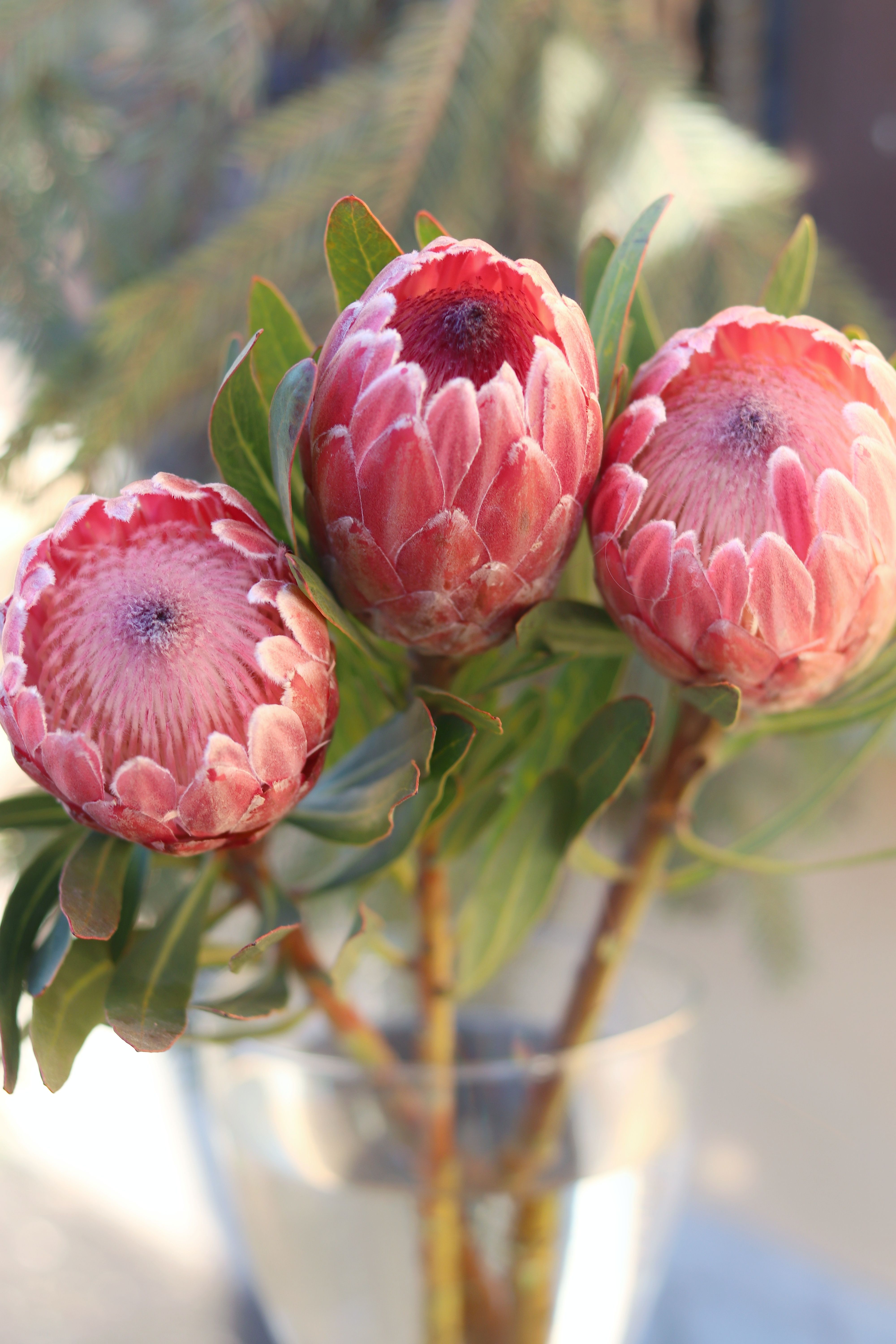
Proteas are native to South Africa, where they grow wild in the fynbos, a rugged, shrubby landscape around the Cape. They belong to one of the oldest families of flowering plants in the world, and the King Protea is South Africa's national flower. Today they are also grown in places with a similar climate, such as Australia, which means they are available for much of the year.
What does the protea flower mean?
Proteas are named after Proteus, the Greek sea god who could change his shape at will. The name reflects the huge variety of shapes, sizes and colours in the protea family. Because of this, proteas have come to symbolise diversity, change and transformation. They are also seen as a symbol of courage and strength, thanks to their ability to thrive in tough conditions.
That makes proteas a meaningful gift for someone starting a new chapter, such as a new job, a new home or a big life change. Learn more about what flowers say in our guide to decoding the meanings behind a bouquet.

Popular types of protea
- King Protea: the largest and best known, with a huge open flower head that can reach up to 30cm across. A real showstopper.
- Queen Protea: a slightly smaller, cup-shaped flower in soft pink, with a fluffy, feathered tip.
- Pink Ice: one of the most popular proteas for bouquets, with elegant pink petals edged in silvery hairs.
- Pincushion Protea: a close relative with bright orange, red or yellow blooms that look like a pincushion full of pins.
- Leucadendron: another member of the protea family, often used like foliage, with colourful cone-shaped heads that add texture to bouquets.

How to care for proteas
Proteas are tough flowers and, with a little care, they can last for two to three weeks in a vase. Here is how to get the most from yours:
- Cut the stems at an angle with a sharp knife or secateurs before putting them in water.
- Remove any leaves that would sit below the waterline.
- Use a clean vase and change the water every two to three days.
- Keep them away from radiators, direct sunlight and fruit bowls, as ripening fruit can shorten their life.
- Protea leaves can darken before the flowers fade. Simply remove them to keep the arrangement looking fresh.
For tips that work for all your flowers, read our guide on how to make a flower bouquet last longer.
Can you dry proteas?
Yes, and they dry beautifully. Once your proteas start to fade, hang them upside down in a cool, dry, dark place for two to three weeks. They keep their shape and much of their colour, so you can enjoy them for months in a dried arrangement.
Proteas from Clapham Flowers
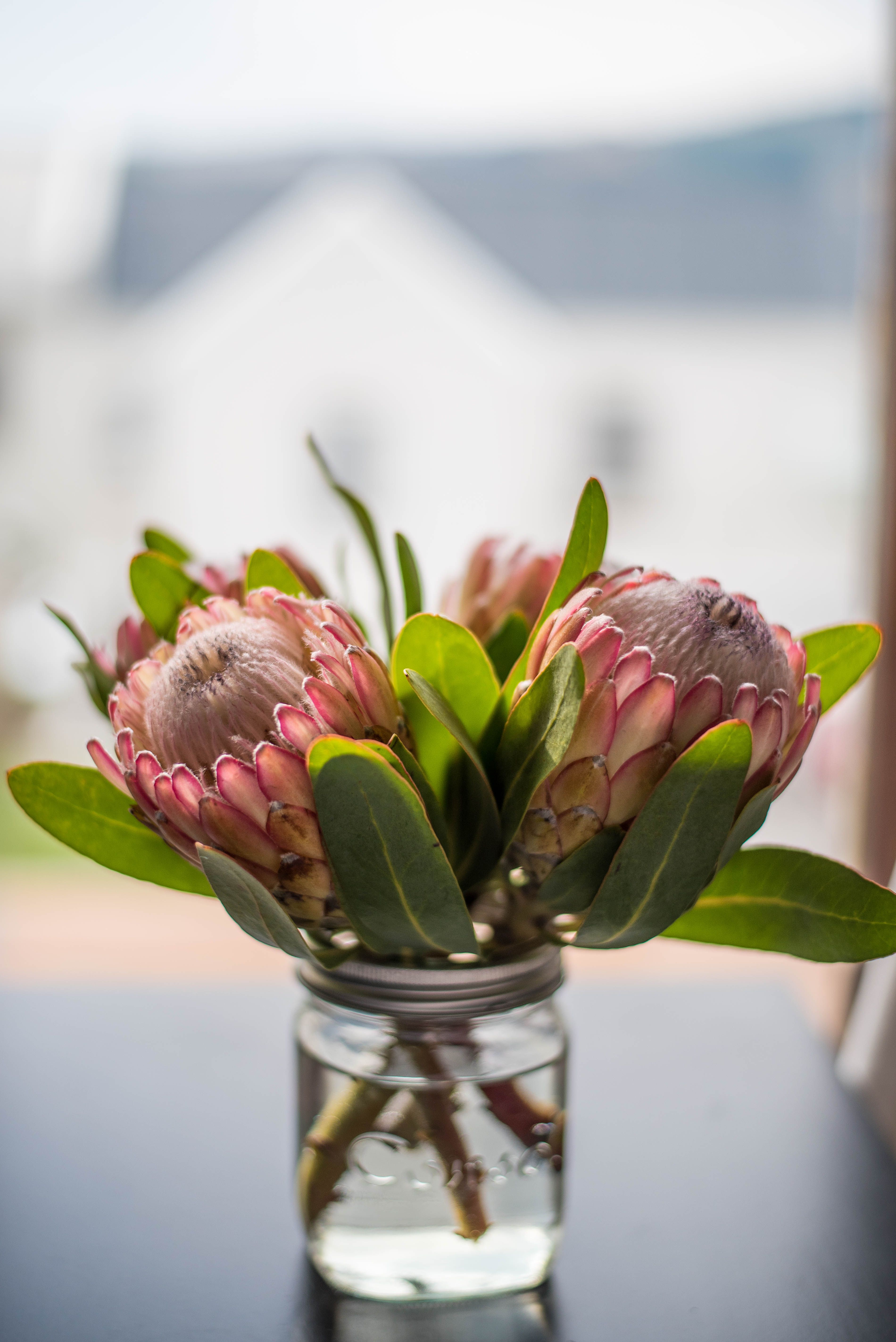
Proteas pair wonderfully with eucalyptus, roses and seasonal foliage, and add a modern, sculptural touch to any bouquet. If you would like proteas included in a bouquet, call our florists on 020 8673 2958 and we will be happy to create something special, subject to availability.
You can also browse our handmade bouquets online, with same-day flower delivery across Clapham and South London when you order by 3.30pm.